
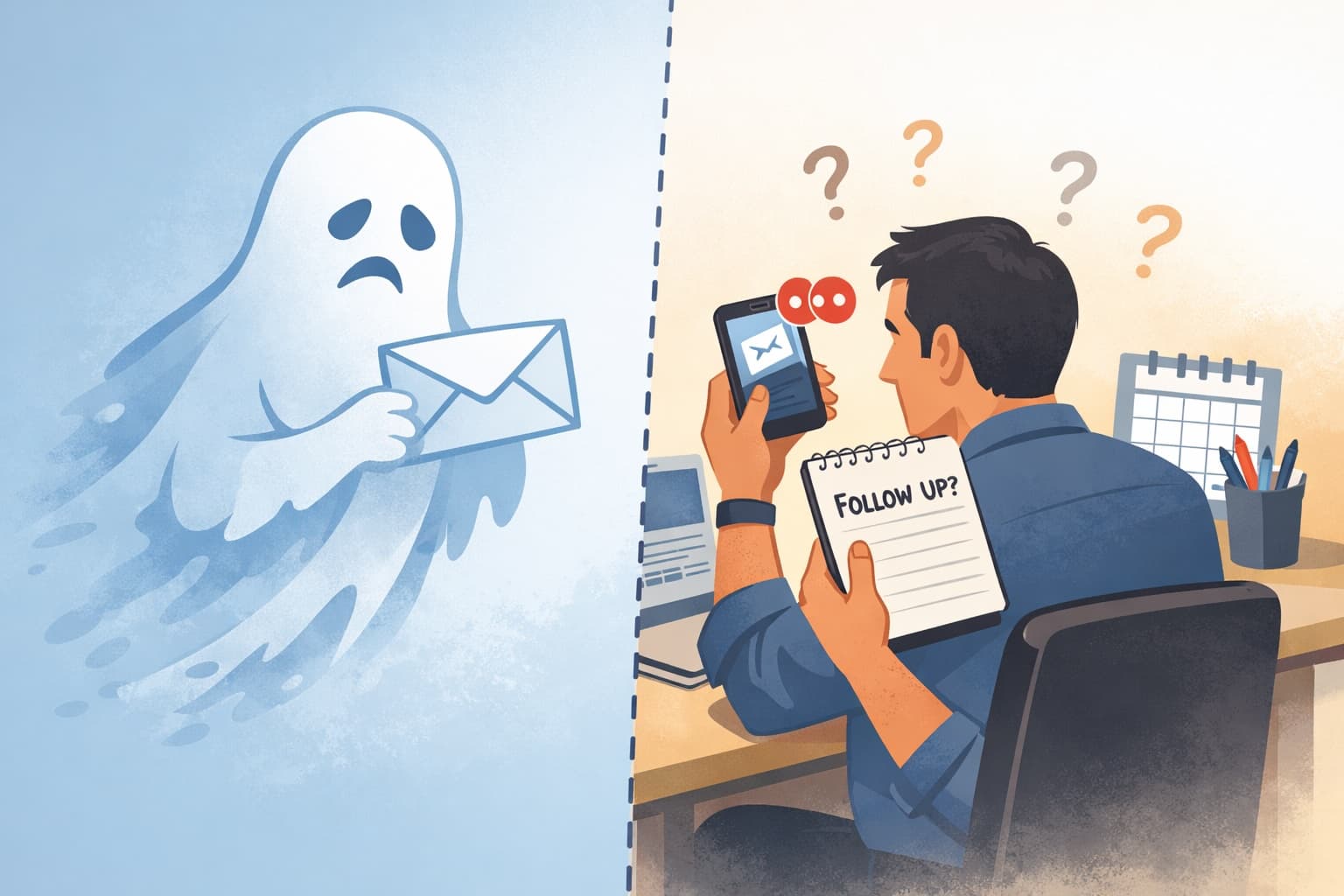
There's a word that's taken over every recruitment conversation right now. Ghosting.
Scroll LinkedIn for five minutes. You'll find it everywhere. Candidates venting. Recruiters defending themselves. HR leaders posting apologies on behalf of an industry they can't quite fix. And underneath all of it, a genuine problem that's gotten dramatically worse.
AI-generated applications have flooded inboxes. Internal talent teams are running lean after two years of cuts. Cost of living is squeezing everyone. Redundancies are everywhere. The mental load on candidates right now is real, and the stress of a job search in this market is not nothing.
So yes, ghosting happens. The system is broken in places. That part isn't up for debate.
But here's what is.
I was speaking to someone recently who told me they'd been ghosted. Frustrated, let down, the whole thing. I asked a simple question.
Did you follow up?
They hadn't.
And I'm sorry, but that's not ghosting. That's two people who didn't call each other back.
Ghosting means you reached out. Someone received it. And they chose not to respond.
It doesn't mean you applied for a job and heard nothing. It doesn't mean a recruiter missed a call. It doesn't mean a hiring manager got busy. Everyone, and I mean everyone, is managing applications, emails, projects, deadlines, and family life simultaneously. Things slip. Calls get missed. Inboxes overflow.
I've been in this industry for twenty years. If every time I felt I hadn't heard back from someone I called it ghosting and left it there, I wouldn't have lasted twenty months.
The job search today requires tenacity. Not desperation, tenacity. There's a difference. Professionally persistent follow-up is not chasing. It's not pestering. It's how the game is played, and anyone who tells you otherwise either isn't hiring or isn't serious.
So let me offer some actual rules. Because not all silence is equal.
At the application stage, you can't really be ghosted
You applied. Possibly alongside 500 other people. An automated rejection is the minimum standard, and frankly even that is a tall order at scale. The expectation of a personal response to a cold application isn't realistic, and calling the absence of one ghosting devalues the word.
That said, companies should do better. A single automated response to confirm receipt costs nothing. Most don't bother.
After a conversation or first interview, now we're talking
Once there's been a real exchange, a human moment, the standard changes. You've given your time. You've opened up about your career. That deserves a response. If a week goes by and you've heard nothing, follow up. One clear, professional note. Not three messages in forty-eight hours, one measured follow-up that shows you're still interested and haven't forgotten.
If you've done that and still heard nothing, fair enough. Maybe you've been ghosted.
The deeper into the process, the higher the obligation
Second interview. Final stage. References submitted. An offer discussed. At this point, silence isn't an oversight, it's a failure. Candidates at this stage have invested real time and real hope. The least a company can do is close the loop, even if the answer is no. Even if it's uncomfortable. A two-line email takes four minutes and it's the difference between someone leaving with their dignity intact or going on LinkedIn to tell three thousand people what your hiring process feels like.
And if you're at this stage and haven't heard back? Pick up the phone. Email the recruiter. Escalate politely. You've earned the right to a response. Chase it.
The inconvenient truth on both sides
Hiring teams are overwhelmed. That's real. But overwhelmed doesn't mean unaccountable. A process that leaves people in the dark isn't just unkind, it's expensive. Every candidate who walks away with a bad experience talks about it. In a market this connected, reputation travels faster than any job ad.
And candidates, the ones who are serious about their search, need to own their part. Passive waiting is not a strategy. Following up is not weakness. It is, in fact, one of the clearest signals you can send that you want the role.
The people I've seen succeed in difficult markets share one quality above almost everything else. They stay engaged. They follow up. They treat the discomfort of not knowing as a reason to act, not a reason to disengage.
Ghosting is a real problem worth calling out.
But it's worth calling out accurately. Not every unanswered application is ghosting. Not every missed call is ghosting. Sometimes it's a system under strain. Sometimes it's a hiring manager who dropped the ball. Sometimes, honestly, it's a candidate who didn't follow through on their end either.
The recruitment process is broken in places. The answer isn't to redefine ghosting so broadly that it becomes meaningless.
The answer is higher standards on both sides, and the persistence to hold them.
And if you've ever felt I've ghosted you, sorry, but did you follow up? Did you really?
Richard